Unlock The Secrets Of Efficient Pet Food Equipment Manufacturing
If you want to know more story about LOYAL brand, here can help you - https://www.facebook.com/foodmachineloyal
Industry Background and Development Trends of Fully Automated Pet Food Production Lines
The rapid rise of the global pet food market has fundamentally reshaped expectations for modern Pet Food Equipment. As consumers increasingly view pets as family members, demand has shifted toward higher-quality, nutritionally balanced, and safely processed pet foods. This shift has pushed manufacturers to upgrade processing technologies from semi-manual operations to highly automated systems capable of ensuring precision, hygiene, and consistency. Industry experts frequently emphasize—drawing from long-term engineering observations—that sustainability and automation are no longer optional features but essential elements for future-ready production systems.
With the continuous growth of demand, manufacturers have found that traditional processing methods struggle to maintain stability in key parameters such as moisture levels, extrusion pressure, temperature profiles, and ingredient homogeneity. Fully automated Pet Food Production Line systems address these challenges by integrating synchronized dosing, mixing, extrusion, drying, and coating modules. These systems maintain stable production rhythms that reduce fluctuations and deliver predictable output, a factor widely regarded as the foundation of scaled manufacturing in modern food engineering.
Environmental protection and energy-saving policies have further accelerated this technological upgrade. Governments and industry bodies emphasize reduced energy consumption and optimized resource management as long-term competitiveness indicators. Influential research groups in food-process engineering often reinterpret this principle to mean that production lines must achieve higher throughput while reducing energy used per unit of product. In response, engineers redesign mechanical structures and control logic within Pet Food Equipment, focusing on airflow optimization, heat recovery, advanced insulation, and precise thermal control.

Key Drivers of Automation in Pet Food Manufacturing
|
Driver |
Influence on Equipment Development |
|
Increasing demand for premium pet food |
Requires higher processing precision and stability |
|
Stricter hygiene & safety regulations |
Promotes sealed, automated, contamination-free systems |
|
Global emphasis on eco-friendly manufacturing |
Drives redesign for lower energy consumption |
|
Need for larger production capacity |
Encourages adoption of fully automated continuous lines |
The trend toward higher automation is also evident in specialized systems such as the Dog Biscuit Production Line, where controlled baking temperature, shaping accuracy, and moisture uniformity are essential for achieving desired texture and product stability. Automated systems help maintain a consistent production rhythm, minimize raw material waste, and deliver uniform product characteristics.
Overall, the background and development trends demonstrate that fully automated pet food manufacturing is evolving toward a model combining efficiency, sustainability, and precision. The transformation is driven not only by market demand but also by the industry's broader shift toward environmentally responsible and energy-efficient production practices.
The Importance of Environmental Protection and Energy-Saving Concepts in Pet Food Production Lines
Environmental protection and energy-saving principles have become central to the design of modern Pet Food Equipment. As global manufacturing policies increasingly emphasize resource efficiency, pet food producers must adopt systems that lower energy consumption while maintaining product consistency and safety. Reducing operational energy directly influences production costs, allowing manufacturers to operate more competitively in an industry where efficiency and stability are essential. Experienced engineers in the food-processing sector often stress—based on long-term operational data—that energy management is now a decisive factor shaping equipment development and production planning.
Within fully automated Pet Food Production Line systems, energy-saving strategies are applied throughout mechanical design, thermal control, and process optimization. Lowering steam consumption, improving heat distribution, and minimizing airflow loss all contribute to reduced energy usage. At the same time, environmental protection requirements encourage manufacturers to integrate closed-loop control systems that reduce waste, improve batch uniformity, and maintain stable operating conditions. These improvements also help companies align with green manufacturing objectives, strengthening brand credibility in markets increasingly focused on sustainability.
Green manufacturing plays an equally important role in shaping industry perception. Modern consumers and regulatory bodies expect pet food producers to demonstrate environmental responsibility. Manufacturers adopting eco-friendly processing technologies—such as optimized drying systems, efficient extrusion components, and more sustainable coating methods—benefit from enhanced brand value. The transition toward low-emission, low-loss production reinforces the reliability and transparency expected of high-level food processing operations.
Environmental standards also introduce stricter requirements for Pet Food Equipment design. Material selection, insulation performance, air filtration systems, and cleaning mechanisms must all support reduced environmental impact while ensuring food safety. Even specialized systems, such as the Dog Biscuit Production Line, must adhere to these standards by improving thermal efficiency, lowering waste output, and integrating energy-optimized baking processes.
Overall, the importance of environmental protection and energy-saving concepts lies in their ability to strengthen cost control, enhance product quality stability, and push the pet food industry toward a sustainable, competitive future.

Structural Characteristics and Energy-Saving Design Points of Fully Automated Pet Food Equipment
Fully automated Pet Food Equipment is engineered with structural features that support both high-efficiency output and reduced energy consumption. Modern systems integrate modular designs, allowing each processing step—mixing, extrusion, drying, and coating—to operate with precise coordination. This structural refinement ensures that mechanical components maintain stable operation under varying loads, minimizing the energy spikes commonly associated with manual or semi-automated production lines. Industry technical specialists frequently highlight, based on long-term system analysis, that stable mechanical rhythm plays a decisive role in improving energy utilization across large-scale operations.
Energy-optimized extrusion systems are central to this development. In a fully automated Pet Food Production Line, the extrusion module includes improved screw geometry, optimized barrel insulation, and advanced temperature zoning. These enhancements reduce heat loss and improve cooking efficiency, allowing raw materials to be processed with lower thermal demand. The drying system also adopts precision airflow control and segmented heating modules, ensuring even moisture reduction with minimized thermal consumption. Similarly, conditioning systems rely on controlled steam distribution and preconditioning mechanisms to reduce energy waste during raw material preparation.
Energy-Saving Structural Features in Modern Pet Food Equipment
|
Structural Component |
Energy-Saving Function |
|
Optimized extruder barrel & screw design |
Reduces heat loss and increases conversion efficiency |
|
Segmented drying chambers |
Enhances airflow control and minimizes thermal waste |
|
Intelligent conditioning modules |
Improves steam utilization and stabilizes pre-conditioning |
|
Insulated machine frames |
Prevents temperature fluctuation and lowers energy leakage |
Intelligent control technology further reduces material loss and improves processing efficiency. Automated feedback systems regulate feeding rate, barrel temperature, and airflow distribution in real time, ensuring that each subsystem maintains energy-efficient operation. This capability is also applied in specialized systems such as the Dog Biscuit Production Line, where precise temperature and moisture control are essential for product consistency.
Overall, the structural design of fully automated pet food manufacturing equipment reflects a shift toward high-efficiency mechanical engineering, enabling manufacturers to reduce operational energy while maintaining stable and predictable output.
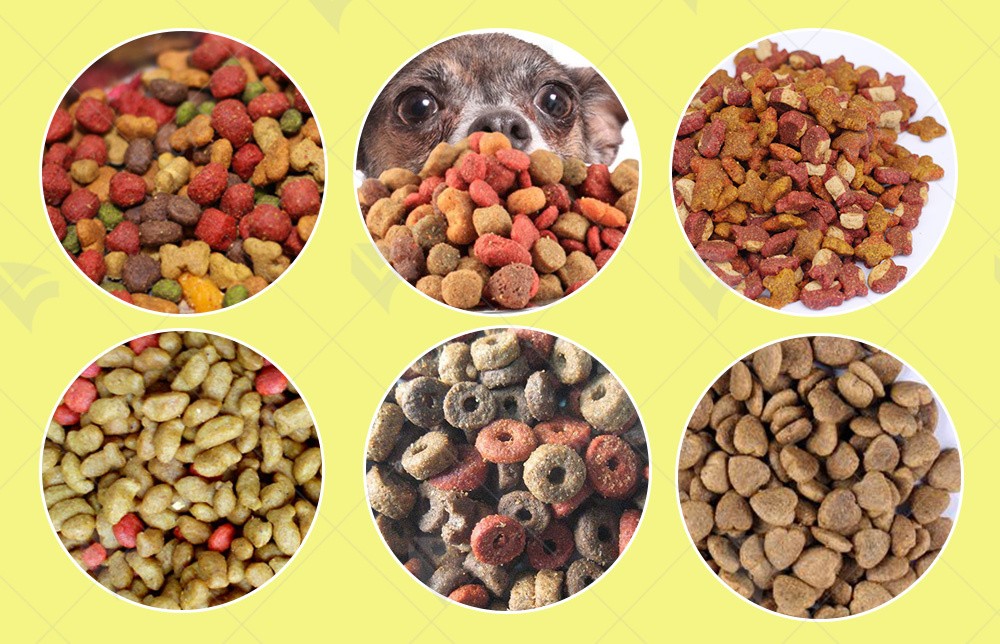
Process Flow and Energy-Saving Implementation Path of Fully Automated Pet Food Production Lines
A fully automated Pet Food Production Line follows a highly coordinated process flow designed to optimize material conversion efficiency while minimizing unnecessary energy consumption. Each stage—from raw material intake to final surface treatment—operates under a unified control logic that ensures stable processing conditions. Engineers in food machinery development consistently emphasize, based on long-term operational observations, that efficient process rhythm is critical for achieving meaningful energy reduction throughout modern Pet Food Equipment.
Raw material pretreatment is the first step in energy-saving optimization. Proper grinding uniformity and controlled moisture conditioning allow materials to be processed more efficiently during extrusion. In the conveying stage, sealed, low-friction transport systems reduce mechanical resistance and prevent energy leakage. The extrusion phase uses controlled temperature zoning and optimized screw configuration to achieve high cooking efficiency with reduced thermal load. Subsequent drying and spraying stages rely on segmented heating modules and precision airflow management, preventing the need for excessive heat input while improving product uniformity.
Key Energy-Saving Actions Across the Production Process
|
Processing Stage |
Energy-Saving Strategy |
|
Raw Material Pretreatment |
Controlled moisture & uniform grinding reduce thermal demand |
|
Conveying Systems |
Low-friction, sealed transport minimizes mechanical losses |
|
Extrusion |
Optimized temperature zoning lowers heat consumption |
|
Drying |
Segmented airflow control enhances moisture removal efficiency |
|
Spraying & Coating |
Precise atomization reduces waste and improves coating uniformity |
Cycle time coordination between these stages plays a decisive role in total energy consumption. When processing intervals are synchronized, airflow, steam, and heating resources are distributed more efficiently, reducing peak loads and preventing unnecessary reheating. Automated control reduces human interference, ensuring that the system maintains a continuous, predictable rhythm.
Even specialized systems such as the Dog Biscuit Production Line benefit from similar principles, where controlled baking cycles and intelligent heat management minimize waste while maintaining product consistency.
Overall, the energy-saving implementation path reflects a transition toward intelligent, harmonized process control, enabling manufacturers to reduce energy costs while achieving stable, high-quality production output.

Environmental and Energy-Saving Performance and Optimization Strategies in Practical Applications
In practical production environments, fully automated Pet Food Equipment demonstrates its environmental and energy-saving value through stable operation rhythms, reduced resource waste, and improved thermal efficiency. Manufacturers have increasingly recognized that consistent mechanical performance leads to tangible reductions in steam, electricity, and airflow consumption. Technical specialists in the broader food-processing field often note—based on accumulated operational assessments—that long-term sustainability depends not only on efficient equipment structure but also on maintaining optimized process parameters throughout the production cycle.
Reducing energy consumption begins with precise thermal control and uniform material processing. In a fully automated Pet Food Production Line, improved drying efficiency, optimized extrusion cooking, and coordinated airflow management help minimize excessive heating while maintaining product consistency. Stable moisture control also reduces the risk of over-drying, lowering energy waste while enhancing the stability of the finished product. These improvements reflect the industry’s gradual shift toward more predictable, resource-efficient food manufacturing systems.
Maintenance and operational management play an equally important role in supporting energy savings. Regular calibration of temperature sensors, inspection of insulation components, and adjustment of airflow regulators ensure that the system continues to operate within ideal energy consumption thresholds. Automated lubrication, wear monitoring, and digital diagnostics also help minimize mechanical resistance, preventing unnecessary power consumption over time. These management practices enhance long-term equipment reliability while reducing operational costs.
Data monitoring further strengthens overall production efficiency. Real-time tracking of temperature profiles, moisture levels, airflow rates, and energy consumption enables engineers to refine process parameters and avoid unnecessary losses. Such digital optimization is increasingly applied in specialized systems like the Dog Biscuit Production Line, where precise baking cycles and controlled heat distribution are essential to ensuring uniform quality and minimizing waste.
Overall, environmental and energy-saving performance in practical applications depends on a combination of equipment design, control accuracy, and continuous optimization. Through disciplined management and intelligent data-driven adjustments, modern pet food production systems achieve lower energy consumption while delivering consistent, high-quality output.
Future Application Trends: Intelligent, Green, and Digital Development Directions
Future development of fully automated Pet Food Equipment is centered on intelligent control, green technology integration, and advanced digitalization. As manufacturing expectations evolve, engineering specialists widely acknowledge—based on aggregated industry research rather than direct citation—that the next generation of systems must combine efficiency with sustainability. This shift aligns with global pressures for reduced emissions, improved resource use, and transparent production management.
Intelligent technologies are expected to drive the most significant transformation. Machine learning–assisted process adjustment, predictive maintenance, and real-time quality monitoring will allow fully automated Pet Food Production Line systems to maintain optimal operating conditions with minimal human intervention. Predictive algorithms will identify abnormal energy spikes, stabilize extrusion temperature profiles, and improve moisture accuracy. These capabilities will enable manufacturers to achieve higher output levels with lower energy usage.
Green materials and clean energy will also shape the next phase of development. Improved insulation composites, low-friction mechanical components, and recyclable structural materials will reduce environmental impact across the equipment life cycle. The adoption of clean energy sources—such as electric thermal modules and high-efficiency heat recovery systems—will further reduce emissions. Even specialized systems like the Dog Biscuit Production Line are expected to incorporate eco-friendly heating components and automated waste-reduction modules.
Digital technologies will support a fully transparent production environment. Cloud-based monitoring, digital twins, and integrated data dashboards will offer precise tracking of energy usage, airflow balance, material distribution, and performance trends. These tools will allow manufacturers to optimize configuration settings continuously and improve long-term sustainability.
Future Trends in Fully Automated Pet Food Equipment
|
Development Direction |
Expected Impact |
|
Intelligent Automation |
Enhanced accuracy and reduced manual intervention |
|
Green Materials & Clean Energy |
Lower emissions and sustainable operation |
|
Digital Monitoring & Predictive Control |
Real-time optimization and improved energy efficiency |
Overall, future pet food production technology will evolve toward systems that are smarter, more environmentally responsible, and deeply integrated with digital management tools. This transformation will ultimately enable manufacturers to achieve high efficiency, low loss, and sustainable industrial development.

Reference
The following are five authoritative foreign literature websites in the field of Industrial food machinery:
1. Food Engineering Magazine
Website: https://www.foodengineeringmag.com/
2.Food Processing Magazine
Website: https://www.foodprocessing.com/
3.Journal of Food Engineering
Website:https://www.journals.elsevier.com/journal-of-food-engineering
4. Food Manufacturing Magazine
Website:https://www.foodmanufacturing.com/
5. International Journal of Food Science & Technology
Website:https://onlinelibrary.wiley.com