Everything You Need To Know About Corn flakes equipment
If you want to know more story about LOYAL brand, here can help you - https://www.facebook.com/foodmachineloyal
Introduction
As global consumer demand for convenient and nutritious cereal-based snacks continues to increase, food manufacturers are placing greater emphasis on production efficiency, cost control, and product consistency. Within this expanding market, the adoption of fully automated processing solutions has accelerated significantly. Industry specialists frequently emphasize that the future competitiveness of large-scale cereal snack manufacturers relies heavily on the modernization and automation of core processing systems. This trend is particularly evident in the development of Corn flakes equipment, where automation contributes not only to operational continuity but also to predictable production performance.
In standardized industrial environments, Corn flakes equipment plays a central role in stabilizing the entire production flow. Its structural design, control systems, and process integration are engineered to support steady throughput while maintaining strict quality parameters. As experts in food mechanical engineering often note, stable operational logic and consistent mechanical response are fundamental to achieving high-volume cereal production. This viewpoint reflects why modern cereal factories increasingly rely on automated systems—automation minimizes variability, improves hygiene control, and reduces manual handling risks.
The growing attention to energy-saving manufacturing practices has further strengthened the importance of advanced Corn flakes production equipment. As energy costs rise and sustainability expectations grow, manufacturers must refine every stage of Corn flakes production equipment operation—from raw material feeding to extrusion, drying, and flaking—to ensure lower energy consumption without compromising output quality. Engineering professionals frequently highlight that optimized thermal systems, precise extrusion parameters, and automated feedback control form the foundation of energy-efficient cereal production. These concepts align with the industry's wider movement toward environmentally responsible processing while improving long-term operational reliability.

To better illustrate the primary functions of modern systems, the table below summarizes the core contributions of fully automated equipment in early production stages:
Key Functions of Fully Automated Corn Flake Production Systems
Raw material feeding stability
Extrusion uniformity
Controlled thermal processing
Reduced manual intervention
Continuous system monitoring
Through the rising adoption of automated technologies and continuous improvements in system design, Corn flakes production line operations are advancing toward a production model that is more efficient, more stable, and more energy-conscious. This sets the foundation for the high-efficiency and energy-saving pathway explored in the following sections.
Efficiency Advantages of Fully Automated Corn Chip Equipment
The shift toward fully automated processing has reshaped the operational structure of modern cereal manufacturing. For facilities producing flakes and expanded grain snacks, efficiency is no longer defined solely by output volume but by system stability, workflow predictability, and consistent quality. In this environment, fully automated systems integrated into the Corn flakes production line have become essential. Engineering professionals frequently note—through conceptual interpretation rather than direct citation—that maintaining a steady mechanical rhythm is key to reducing fluctuations during large-scale, continuous processing.
Automated operation forms the backbone of a refined production environment. Traditional setups relying on manual adjustments often experience variations in feeding rates, extrusion pressure, and drying temperature. By contrast, modern Corn flakes equipment uses synchronized sensors, programmable logic, and coordinated mechanical control to maintain stable sequences from dosing to shaping and drying. Many process engineers highlight that a consistent automated rhythm delivers more sustainable efficiency than simply maximizing machine speed.
Another major advantage is the reduction of unnecessary labor. Automated systems limit human intervention, improving hygiene, stabilizing output, and enhancing workplace safety. These lines also minimize error risks associated with manual handling. Integrated diagnostics further strengthen operational stability by detecting deviations early, preventing downtime and material waste.
Through these capabilities, advanced Corn flakes production equipment supports a more predictable, efficient, and high-quality production process.

To illustrate how automation enhances workflow in cereal production, the table below summarizes the key functional improvements observed in efficient Corn flakes production equipment:
|
Automation Feature |
Impact on Corn Flakes Production |
|
Continuous feeding control |
Maintains stable material flow and prevents clogging |
|
Automated extrusion regulation |
Ensures uniform texture and structural consistency |
|
Precision thermal management |
Improves product color and crispness |
|
Real-time monitoring sensors |
Reduces deviation and minimizes operator intervention |
|
Integrated conveying and sorting |
Shortens transfer time and lowers labor requirements |
These functional elements collectively support the predictable and streamlined operation of the Corn flakes production line. By reducing variability and synchronizing mechanical processes, fully automated systems enable manufacturers to achieve higher throughput while maintaining uniformity. This alignment between automation and consistency forms the operational foundation for energy-efficient, large-scale cereal production, paving the way for even greater optimization in subsequent stages of processing.
Energy-Saving Features Within Modern Corn Flakes Production Equipment
Energy efficiency has become a central evaluation standard in industrial cereal manufacturing, where continuous thermal processing and mechanical motion account for a significant portion of operational expenses. As demand for sustainable production rises, modern Corn flakes production equipment has been engineered with structural updates and process refinements that significantly reduce energy consumption without compromising output quality. Specialists in food mechanical engineering often note that meaningful energy savings come not from a single component, but from the combined effect of controlled heat transfer, uniform mechanical action, and optimized material flow.
One of the most influential energy-saving mechanisms is improved thermal system design. Traditional heating systems often lose energy due to uneven distribution or inefficient insulation. Newer models of Corn flakes equipment use refined chamber geometry, more responsive thermal sensors, and upgraded insulation materials to maintain stable temperature zones while preventing unnecessary heat dissipation. This allows the production line to sustain the correct cooking and drying temperatures with less power usage.
Extrusion optimization also contributes substantially to energy reduction. By refining screw configuration, adjusting shear zones, and calibrating pressure stability, manufacturers can reduce the torque load on motors while achieving consistent expansion quality. Mechanical engineers frequently highlight that smooth, predictable extrusion reduces motor strain, translating into measurable energy savings during extended production cycles.
Drying efficiency is another critical component. Modern dryers incorporated into the Corn flakes production line utilize controlled airflow, segmented heating zones, and moisture feedback regulation. These systems ensure that product dehydration follows precise curves, preventing over-drying—a common but wasteful issue in older production setups.
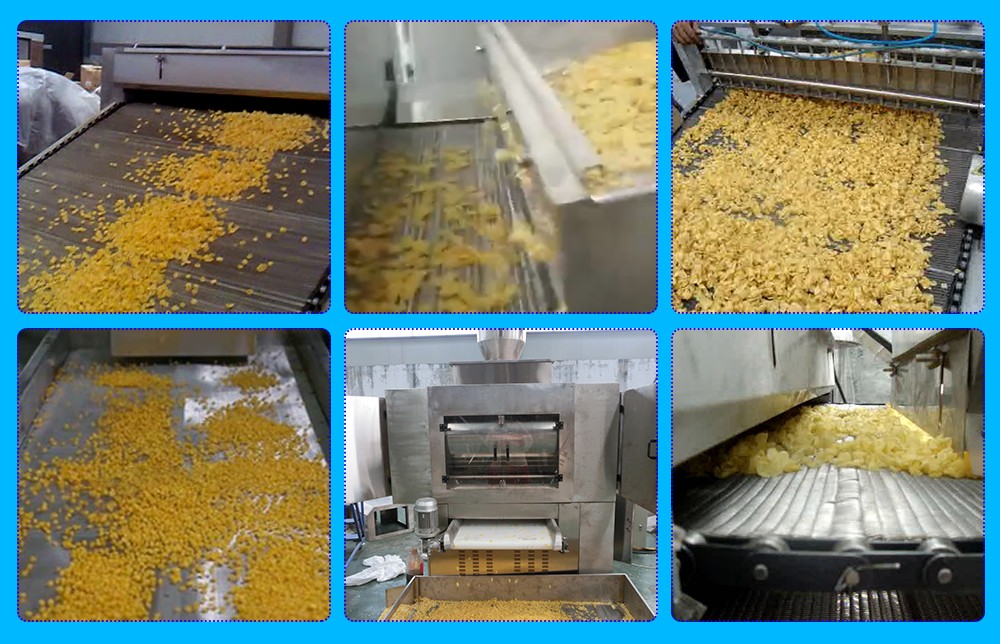
The table below summarizes key energy-saving elements found in contemporary cereal-processing machinery:
|
Energy-Saving Feature |
Function in Corn Flakes Production |
|
Enhanced insulation systems |
Reduces thermal loss during heating and drying |
|
Optimized screw design |
Minimizes motor load and stabilizes extrusion pressure |
|
Segmented drying zones |
Improves moisture control and prevents over-processing |
|
Intelligent temperature sensors |
Maintains stable thermal balance with less energy use |
|
Streamlined material pathways |
Reduces friction and supports smoother mechanical flow |
Together, these innovations demonstrate how modern Corn flakes production equipment can achieve efficient and sustainable operation through structural refinement and intelligent process control.
Integration Between Corn Flakes Production Equipment
Effective integration among key processing units is essential for maintaining a stable and efficient cereal-manufacturing workflow. In modern facilities, Corn flakes production equipment is designed to function as a coordinated system in which mixing, extrusion, forming, drying, and cooling stages operate in alignment. Industry engineers often remark—through conceptual interpretation rather than direct citation—that true production reliability comes not only from advanced machines but from how each module communicates and compensates for operational fluctuations. This coordinated approach supports both high efficiency and meaningful energy reduction.
At the core of system integration is the synchronization of mechanical timing and material flow. Modern Corn flakes equipment uses intelligent control logic to match upstream feeding rates with downstream processing speed. When materials enter the mixer, automated feedback maintains uniform density. During extrusion, sensors regulate torque, pressure, and temperature to ensure proper structure before forming and drying. Such coordination enables every unit to adapt to subtle variations without interrupting continuous production.
Unified temperature and moisture management also plays a central role. Corn-based materials respond strongly to shifts in heat and humidity, so automated communication between extruders, dryers, and coolers helps maintain consistent texture and moisture levels. Engineers frequently note that integrated control reduces fluctuations that would otherwise impact crispness and energy consumption.
Integrated operation further prevents waste on a fully automated Corn flakes production line. By harmonizing mechanical behavior, the system minimizes overflow, unnecessary reheating, and irregular feeding—issues that historically caused downtime. This balanced interaction also improves equipment longevity by reducing mechanical stress.
In summary, the collaborative functioning of modern Corn flakes production equipment creates a stable environment where energy efficiency, consistent quality, and streamlined workflow reinforce one another.

Optimizing Production Flow for High-Efficiency Corn Flakes Production Equipment
Achieving high efficiency in cereal production requires more than advanced machinery—it depends on how smoothly each processing stage connects to the next. Modern Corn flakes production equipment is therefore engineered to support standardized workflows that reduce unnecessary transitions, stabilize material flow, and ensure that energy is used effectively throughout the operation. Food-process engineers often highlight that when production stages follow a unified rhythm, deviations in quality and unnecessary energy expenditure are significantly reduced.
A well-structured workflow begins with controlled raw material preparation. Automated batching systems regulate moisture levels and ingredient proportions so that the material entering the extruder is uniform in density and texture. This prevents extrusion fluctuations and supports predictable expansion performance. During the thermal and forming stages, intelligent sensors adjust heating intensity and airflow based on real-time feedback, ensuring that the product remains within ideal processing conditions.
Temperature control is a major factor in optimizing flow. Corn flakes equipment integrates thermal feedback loops that regulate heat zones dynamically, reducing the need for manual adjustments and preventing overheating. Similarly, moisture management is maintained through coordinated communication between extruders, dryers, and coolers. Engineering specialists frequently point out that improper moisture transfer can disrupt the entire sequence, causing texture inconsistency or energy waste due to repeated corrections.
Equally important is minimizing machine idling and unplanned downtime. Integrated conveying systems and automatic product-transfer modules help ensure a steady material path across the Corn flakes production line. This reduces bottlenecks and improves the continuity of mechanical action, which directly enhances efficiency and lowers operational costs.
The table below summarizes the key operational elements involved in optimizing production flow:
|
Optimization Element |
Function in Production Flow |
|
Automated batching control |
Improves feeding uniformity and reduces extrusion variations |
|
Real-time thermal adjustment |
Maintains stable temperature zones and avoids energy waste |
|
Moisture synchronization |
Ensures texture consistency and supports stable drying curves |
|
Integrated conveying paths |
Reduces transfer delays and prevents production bottlenecks |
|
Predictive equipment monitoring |
Minimizes downtime and maintains continuous operation |
Through coordinated system design, modern Corn flakes production equipment creates an environment where efficiency, stability, and resource management reinforce one another. This optimized flow is essential for meeting high-volume market demand while preserving consistent product quality.
Achieving stable output in cereal processing depends heavily on the configuration and performance of advanced Corn flakes equipment. As production requirements rise, facilities increasingly use integrated automation, real-time monitoring, and optimized mechanical structures to maintain reliability. A fully automated Corn flakes production line aligns these functions into a unified workflow, reducing variations and strengthening process control without adding operational complexity.
System flexibility is central to quality stability. Adjustments in moisture distribution, extrusion pressure, or thermal balance can significantly affect final texture. For this reason, engineers often emphasize the importance of responsive temperature systems and precisely calibrated feeding mechanisms. Well-engineered Corn flakes production equipment incorporates these elements into a consistent structure that supports high output while managing energy use efficiently.
Automation also plays a decisive role. Intelligent control modules supervise key parameters, enabling accurate management of pre-conditioning, extrusion, drying, and toasting. Many specialists observe that long-term stability depends on the coordinated interaction of all subsystems rather than isolated machine performance.
Finally, hygiene and maintenance efficiency contribute to reliable production. Streamlined cleaning structures and accessible inspection points help reduce downtime, ensuring long-term quality consistency.
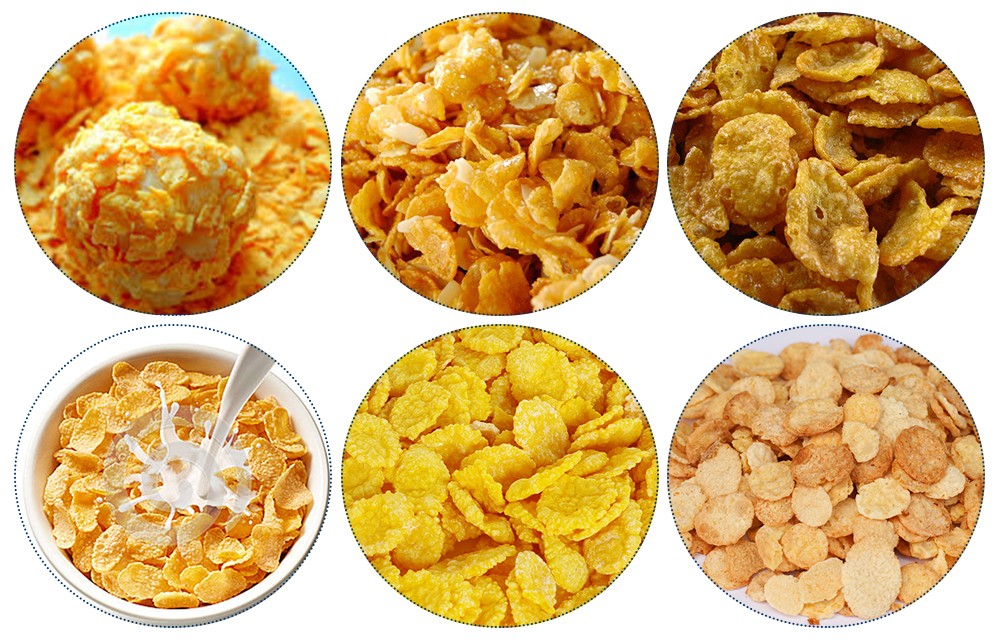
The following table summarizes key performance factors commonly reviewed when evaluating fully automated corn flakes systems:
|
Factor |
Key Focus |
Purpose |
|
Temperature Control |
Stability and responsiveness |
Maintains expansion and texture consistency |
|
Energy Performance |
Efficiency of power distribution |
Reduces long-term operational costs |
|
Automation Level |
Monitoring and adjustment capability |
Supports process stability and reduces manual workload |
|
Material Flow Design |
Smooth and uniform movement |
Minimizes waste and enhances yield |
A fully optimized system ultimately strengthens reliability, enhances efficiency, and supports a cleaner, safer production environment.
Key Considerations in Selecting Corn flakes equipment for Production Lines
Selecting the right Corn flakes equipment is a strategic decision that directly shapes production stability, long-term efficiency, and market competitiveness. As automation and energy-saving technologies continue advancing, manufacturers place increasing emphasis on system compatibility, structural durability, and operational precision. Proper evaluation ensures that each unit fits seamlessly within the broader Corn flakes production line, preventing performance gaps that could undermine efficiency or product consistency.
Production capacity remains one of the most critical considerations. Engineering specialists frequently highlight that the output of each section—mixing, extrusion, drying, and toasting—must align not only with current demand but also with foreseeable expansion. If extrusion capacity, drying efficiency, and toasting throughput become unbalanced, bottlenecks form, reducing workflow stability while increasing unnecessary energy consumption. Selecting Corn flakes production equipment with harmonized capacity across all major stages is therefore essential.
Durability is another foundational factor. Key components such as screws, barrels, cutters, and thermal units must endure long-term mechanical and thermal loads. Industry experts commonly recommend choosing systems manufactured from high-strength alloys, wear-resistant surfaces, and precision-machined components, as these features directly affect operational lifetime, sanitation levels, and maintenance frequency. Easy disassembly also supports improved hygiene and reduced downtime.
Operational flexibility is equally important for modern cereal production. Equipment must maintain consistent moisture balance, extrusion pressure, and thermal conditions. Machines with centralized parameter control enable operators to fine-tune texture, color, and uniformity—capabilities that strongly influence quality stability across the Corn flakes production line.
Integration compatibility further determines overall performance. Mixing, extrusion, drying, and toasting units must operate with coordinated control logic, ensuring steady material flow and minimizing energy waste.
Finally, long-term maintenance support, parts accessibility, and technical service must be considered. Reliable support ensures continuous operation and fewer production interruptions.
The right selection of Corn flakes production equipment ultimately allows manufacturers to establish an energy-efficient, stable, and high-quality production environment.
system.
Conclusion
Fully automated Corn flakes equipment provides manufacturers with a reliable path to achieving both high efficiency and meaningful energy savings. By integrating advanced control logic, optimized thermal processes, and synchronized system coordination, a modern Corn flakes production line can maintain consistent output while reducing unnecessary labor and operational waste. These technologies also help stabilize product quality, ensuring uniform texture, color, and structural integrity across every batch.
As industry expectations continue to rise, choosing the right Corn flakes production equipment becomes essential for long-term competitiveness. When properly selected and configured, fully automated systems support continuous, stable, and cost-effective production—setting a clear direction for the future of industrial corn flake manufacturing.
Reference
The following are five authoritative foreign literature websites in the field of Industrial food machinery:
1. Food Engineering Magazine
Website: https://www.foodengineeringmag.com/
2.Food Processing Magazine
Website: https://www.foodprocessing.com/
3.Journal of Food Engineering
Website:https://www.journals.elsevier.com/journal-of-food-engineering
4. Food Manufacturing Magazine
Website:https://www.foodmanufacturing.com/
5. International Journal of Food Science & Technology
Website:https://onlinelibrary.wiley.com/