Maximizing Efficiency with Bread Crumbs Process: Tips for Modern Production Lines
INTRODUCTION
In today’s highly competitive food manufacturing industry, achieving high production line efficiency is crucial for staying profitable and meeting growing consumer demand. Modern bakeries and food processing facilities are increasingly relying on advanced machinery to optimize their operations. Among these technologies, the bread crumbs extruder has emerged as a vital tool that can significantly enhance productivity while ensuring consistent product quality.
A bread crumbs extruder works by compressing and shaping bread or dough into uniform crumbs through a series of rollers and dies. This automated process reduces manual labor, minimizes waste, and guarantees that each batch of bread crumbs maintains consistent size, texture, and appearance. The precision offered by this machinery not only improves the final product but also directly contributes to increased production line efficiency by enabling continuous operation with minimal downtime.
Integrating a bread crumbs extruder into a modern production line allows manufacturers to better control key factors such as moisture content, density, and granule size, which are critical for both consumer satisfaction and industrial applications. Efficient use of this equipment can lower operational costs, reduce resource consumption, and increase overall throughput. In this article, we will explore practical strategies and expert tips to maximize efficiency using a bread crumbs extruder, helping production lines operate more smoothly, reliably, and profitably.
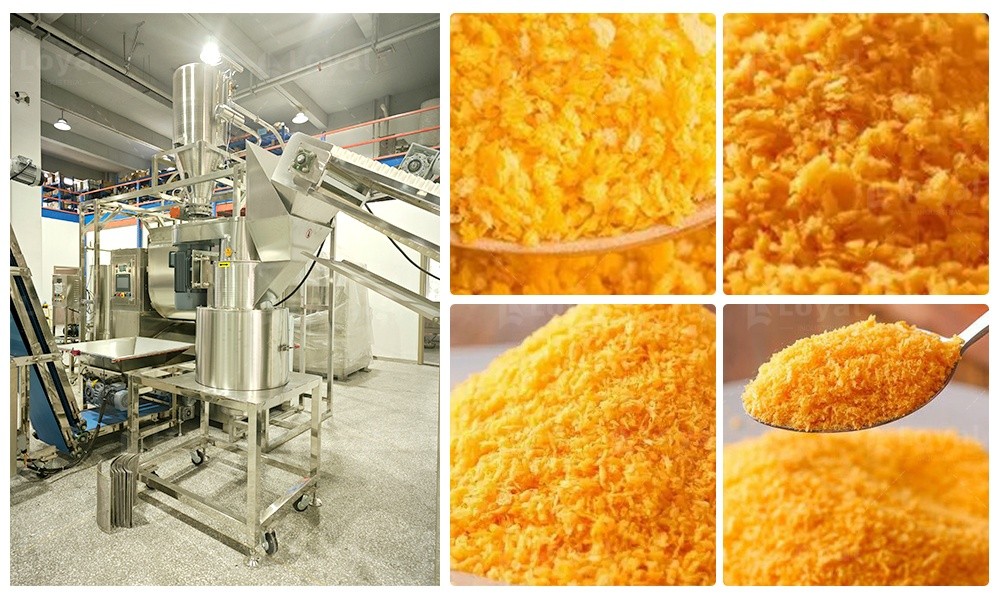
A modern breadcrumb extrusion production line is a complex system designed to efficiently transform raw bread or dough into uniform, high-quality breadcrumbs. At the core of this system lie the breadcrumb extruder and a pulverizer equipped with a dust removal system; the extruder is responsible for shaping the material, while the pulverizer—with its integrated dust control—processes it into breadcrumbs. Understanding the various components and workflow of this extrusion line is crucial for maximizing production efficiency and ensuring consistent product quality.
The production line typically comprises several key components: a raw material feeding system, an extruder, a pulverizer, a sifter, a dryer, and a packaging machine. The twin-screw extruder itself consists of a feed hopper, screws, a barrel, and an extrusion die; these components work in tandem to produce a uniform material output. During operation, the extruder's speed, temperature, and pressure must be precisely regulated to maintain consistency.
One of the primary advantages of utilizing a breadcrumb extrusion production line is its minimal space requirement and low operational cost. This system allows for significant reductions in both labor and machinery costs, while simultaneously boosting production output. Furthermore, the ability to precisely control moisture content, particle size, and color during the extrusion process ensures that the final breadcrumbs meet both industry standards and consumer expectations.
For businesses seeking to enhance their production line efficiency, understanding the interplay between each component within the extrusion system is paramount. Proper integration and maintenance of the system can prevent production bottlenecks, minimize downtime, and optimize energy consumption. This knowledge not only empowers operators to produce high-quality breadcrumbs but also facilitates a production process that is more economically efficient and environmentally sustainable.
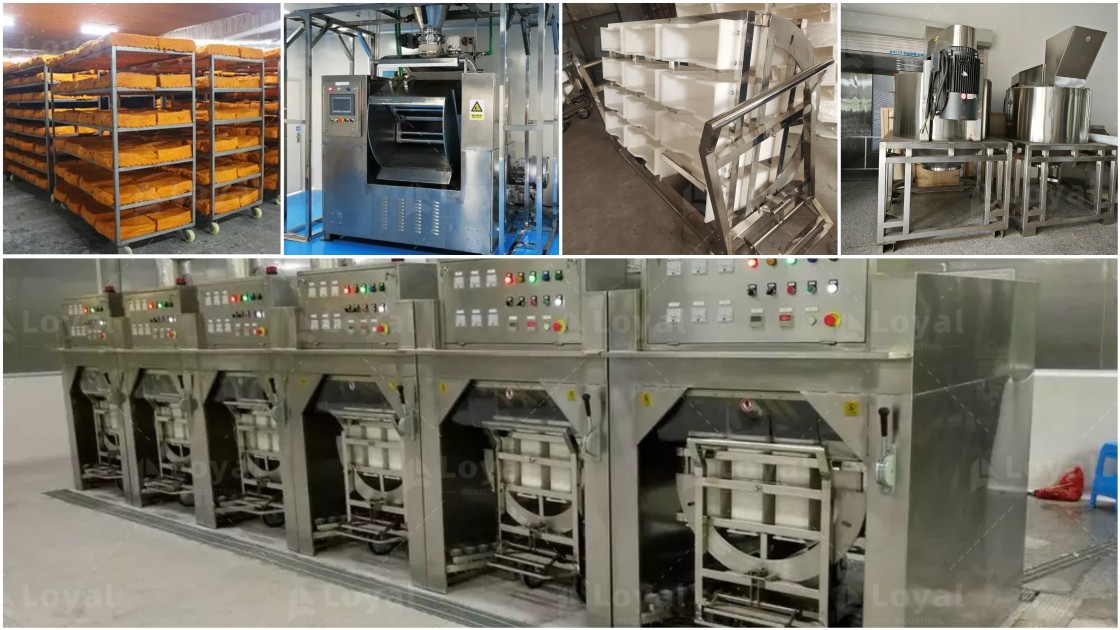
UNDERSTANDING THE BREAD CRUMBS EXTRUDE PRODUCTION LINE
PROCESS:
DUST-FREE FEEDING STATION WITH VIBRATING SCREEN →VACUUM FEEDER CONVEYOR→
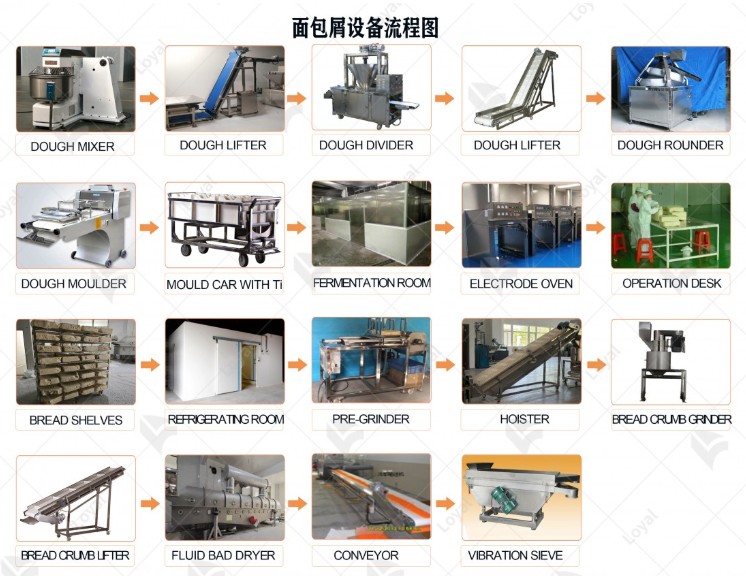
AUTOMATIC WATER FEEDING SYSTEM→RIBBON MIXER→SCREW HOISTER→DOUBLE SCREW EXTRUDER→PULLING AND CUTTING MACHINE→HOIST→BREAD CRUMB PULVERIZER WITH DUST REMOVAL SYSTEM→HOIST→VIBRATION SQUARE SCREENING MACHINE→ HOIST→5 LAYER 7 METER DRYER ( ELECTRIC TYPE)→COOLING CONVEYOR→PACKAGING MACHINE
|
Machine |
Function |
|
Dust-Free Feeding Station With Vibrating Screen |
Featuring a dust-free, enclosed design, it facilitates preliminary material screening and discharge while preventing dust leakage. |
|
Ribbon Mixer |
Ribbon-type spiral blades are utilized to rapidly and uniformly mix various ingredients—such as flour, water, and sugar—thereby laying the foundation for the subsequent extrusion and cooking process. |
|
Double Screw Extruder |
Through the controllable high temperatures and high shear forces generated by a twin-screw mechanism, the raw materials are cooked and extruded into shape, causing the product to instantly expand as it exits the die. |
|
Bread Crumb Pulverizer With Dust Removal System |
A high-speed rotating cutter disc is utilized to pulverize the dried semi-finished product to the target particle size, and a dust removal system is equipped to recover the dust generated during processing. |
|
Vibration Square Screening Machine |
A multi-layer vibrating screen is utilized to precisely classify the crushed breadcrumbs, ensuring uniform and consistent particle size in the finished product. |
|
Dryer |
It employs a multi-layer reciprocating conveying structure that utilizes circulating hot air to remove moisture from the breadcrumbs, thereby achieving the objectives of shaping, curing, and extending shelf life. |
The entire bread crumbs production process begins with the raw material handling and mixing system. This system comprises flour storage silos, automatic metering devices, and a continuous mixer. Precision is paramount at this stage, as the specific ratios of flour, water, starch, sugar, and salt directly determine the final texture and color of the breadcrumbs. Modern production lines employ "loss-in-weight" feeders to ensure formula consistency; the materials subsequently enter a conditioner, where they undergo preliminary humidification and steam treatment.
Immediately following this is the core of the entire process: the twin-screw extruder. Unlike single-screw designs, the twin-screw configuration offers unparalleled control over the cooking process. As the material is conveyed through the barrel, it is subjected to precisely controlled temperatures (reaching 180°C or higher) and intense shear forces. This combination of mechanical and thermal energy induces starch gelatinization and protein denaturation, resulting in the formation of a uniform, molten dough. Upon reaching the die outlet, the sudden release of pressure causes the material to expand and take shape.
The pulverizer is a critical component in the extruded breadcrumb production line, tasked with breaking down the dried, large-block or strip-form intermediate products into the desired particle size. This unit is typically positioned downstream of the dryer and upstream of the sifter. Its core operating principle relies on high-speed rotating blades, hammers, or grinding discs to exert intense impact, shear, and grinding forces on the material, thereby shattering the crisp breadcrumb matrix into fine particles. In the production of extruded breadcrumbs, the control of the equipment's rotational speed and the selection of the screen mesh size directly determine the final product's morphology: lower speeds are suitable for producing coarse, flaky Japanese-style breadcrumbs that retain a layered structure, while higher speeds—paired with finer screens—are utilized to produce fine, powdery breadcrumbs. From an operational standpoint, particular attention must be paid to heat generation during high-speed operation, as excessive frictional heat can compromise the breadcrumbs' crisp texture. Furthermore, a robust dynamic balancing design helps ensure a uniform particle size distribution and minimizes the generation of excessive fine dust, thereby maximizing the yield of finished product.
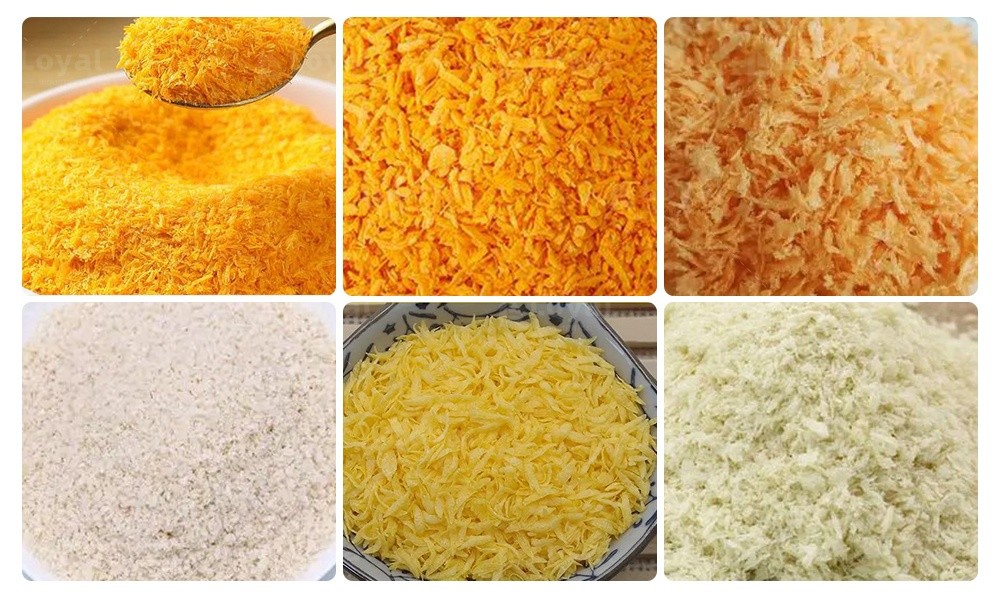
Used in conjunction with a dust collector, the pneumatic suction conveyor serves as an eco-friendly transport solution; it utilizes a negative-pressure airflow within a closed pipeline to facilitate the vertical or horizontal conveyance of powdery or granular breadcrumb materials. It typically serves as a connecting link between a pulverizer and a vibrating screen, or between screening equipment and a packaging machine. Its operating principle relies on a blower generating a vacuum suction within the pipeline to draw material from its source via a suction tube. Once conveyed by the high-velocity airflow to a separation unit situated above the target equipment, the material settles and is discharged under the combined influence of gravity and a filtration barrier; concurrently, dust-laden air is purified by filter elements within a dust collector before being vented into the atmosphere. In an extruded breadcrumb production line, the core value of this equipment lies in enabling dust-free, enclosed conveying. This not only prevents environmental pollution and material waste caused by the leakage of flour or breadcrumb dust but also ensures a hygienic workshop environment. In practical operation, particular attention must be paid to the pipeline diameter and elbow design to ensure an unobstructed flow path and prevent blockages caused by irregularly shaped breadcrumb flakes. Furthermore, the filter elements within the dust collector require regular cleaning and maintenance to ensure consistent suction, prevent dust accumulation and mold growth, and avoid creating hygiene hazards.
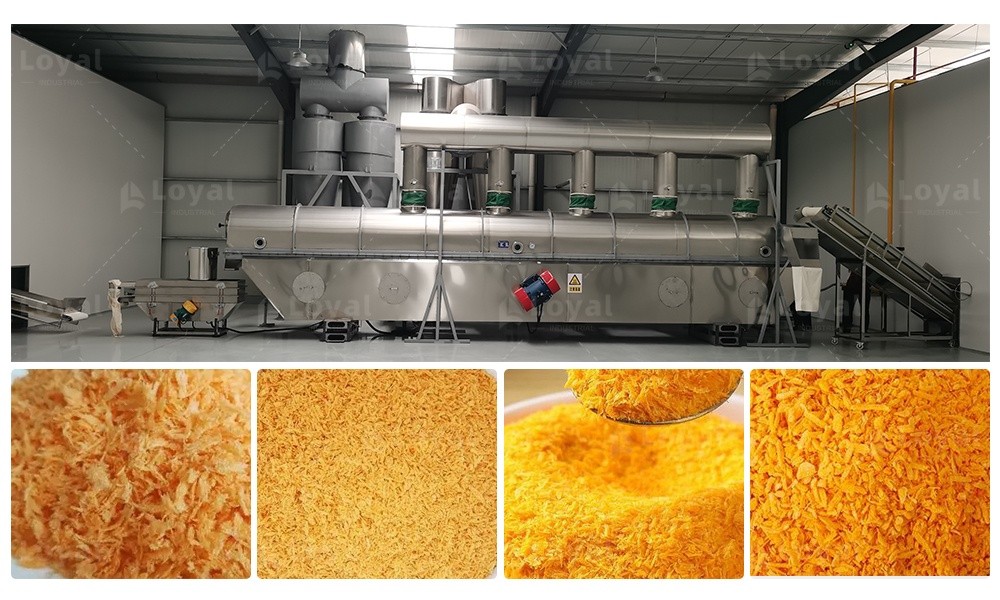
The three-layer dryer employs a three-tier reciprocating conveyor belt structure to achieve continuous drying by extending the material's travel path. Its operating principle involves electric heating tubes generating heat, while blowers direct hot air onto the material, which is spread evenly across the upper mesh belt. As the material travels along the mesh belt to its terminus, it drops onto the middle mesh belt, which moves in the opposite direction. After undergoing three such reciprocating cycles, the material achieves full contact with the hot air, thereby drying the breadcrumbs and extending their shelf life. In the production of extruded breadcrumbs, this equipment serves not only to dry and set the product's shape but also—through precise temperature control—to further cook the material and impart an appealing golden hue. Although the electric heating design entails lower initial investment and offers precise temperature control, long-term operating costs must be evaluated in light of local electricity rates. Additionally, it is imperative to strictly ensure a uniform temperature distribution within the three-layer drying chamber to prevent quality issues such as surface scorching while the interior remains insufficiently dry.
The vibrating screen serves as the final screening device, positioned downstream of the pulverizer and upstream of the packaging machine; it is responsible for the particle-size classification and quality control of the crushed breadcrumbs. This equipment typically features a multi-layer screen design to ensure the uniformity and consistency of the finished product's granules. The operating principle of this equipment relies on the exciting force generated by a vibrating motor, which causes the material to follow a hopping trajectory across an inclined screen surface. Fine particles smaller than the screen mesh size pass through the screen and fall to the level below, while coarser particles—larger than the mesh size—travel forward along the screen surface and are discharged through the corresponding outlet. In an extrusion-based breadcrumb production line, the vibrating screen is typically configured with two or three layers: the upper screen retains oversized, non-conforming particles, returning them to a pulverizer for reprocessing; the lower screen sifts out excessively fine powder, which is then treated as substandard material or recycled; and the middle screen separates the uniformly sized particles, which constitute the qualified finished product ready to proceed to the packaging stage. The operational performance of this equipment directly impacts the commercial value of the product; therefore, particular attention must be paid to ensuring proper screen tension to prevent "coarse material bypass"—a phenomenon where large particles pass through without being screened—while simultaneously verifying that the sealing cover remains intact to prevent dust leakage during the screening process. Furthermore, given the relative hardness of breadcrumb particles, regularly inspecting the screen for wear and replacing it in a timely manner constitutes a critical maintenance measure for ensuring screening accuracy.
How to Choose the Right Production Line
When selecting the right bread crumbs extrude production line, consider the following key factors:
|
Production Capacity: Determine your current and future demand. Choose a line that balances output and energy consumption to avoid over- or under-sizing. |
|
Material and Build Quality: Prefer stainless steel construction for food safety, durability, and easy cleaning. Ensure all materials are suitable for food contact. |
|
Certifications and Compliance: Verify that the equipment meets international food safety standards. Look for relevant certifications to ensure regulatory compliance. |
|
Manufacturer Support and Service: Select a factory that provides reliable after-sales service, installation, and operator training. Ensure timely maintenance support to minimize downtime. |
|
Spare Parts and Warranty: Check the availability of spare parts for long-term maintenance. Consider the length and coverage of the machine warranty. |
|
Reputation and Experience: Choose a manufacturer with proven experience in the food processing industry. Look for references or case studies to ensure reliability. |
|
Cost vs. Value: Balance initial investment with long-term efficiency and durability. Avoid choosing solely based on the lowest price. |
Reference
1. Food Processing:
Website: [Food Processing](https://www.foodprocessing.com/)
2. Food Engineering:
Website: [Food Engineering](https://www.foodengineeringmag.com/)
3. Process Industry Forum:
Website: [Process Industry Forum](https://www.processindustryforum.com/)
4. Food Manufacture:
Website: [Food Manufacture](https://www.foodmanufacture.co.uk/)