The Future of Pasta Processing: Innovations in Macaroni Production Line Technology (2026)
Introduction
The global pasta industry is undergoing its most significant technological transformation in generations. As consumer demand surges for both traditional semolina products and alternative-formulation pastas—ranging from gluten-free blends to protein-fortified varieties—manufacturers face mounting pressure to modernize their production capabilities. At the heart of this evolution lies the macaroni production line, a sophisticated assembly of precision engineering and process automation that determines not only throughput efficiency but also the fundamental quality of the finished product .
Looking toward 2026 and beyond, the convergence of Industry 4.0 principles, sustainability mandates, and materials science advancements is redefining what's possible in pasta manufacturing. From smart sensors that predict maintenance needs to energy-efficient drying systems that slash operational costs, the modern macaroni production line represents a quantum leap from the manually intensive operations of just a decade ago. This guide examines the technological innovations reshaping the industry and provides a framework for procurement teams navigating this complex landscape.
Understanding the Modern Macaroni Production Line
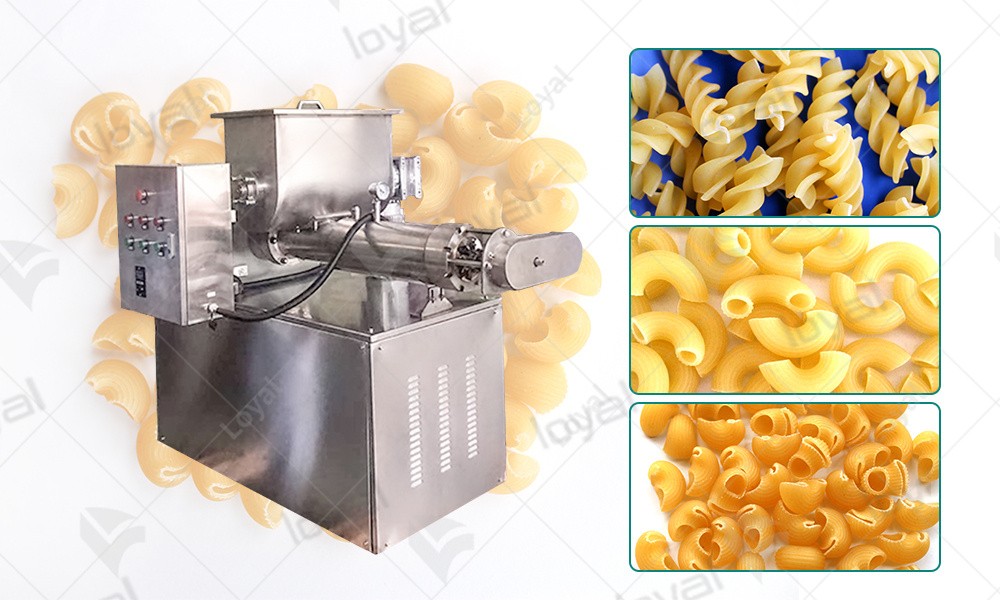
A macaroni production line is an integrated system of machinery designed to transform raw ingredients—primarily durum wheat semolina and water—into finished pasta products through a series of precisely controlled processes. While the fundamental principle of extrusion remains unchanged since pasta's industrial origins, today's lines bear little resemblance to their predecessors .
The core equipment categories include:
Extrusion Systems: The heart of any macaroni production line is the single-screw pasta extruder, which kneads hydrated semolina into a dense dough and forces it through specialized dies to create specific shapes. Modern vacuum extruders remove air during processing, eliminating microbubbles that would otherwise weaken the pasta structure and create an undesirable opaque appearance . This vacuum technology, once reserved for premium European manufacturers, has become increasingly accessible across all price tiers.
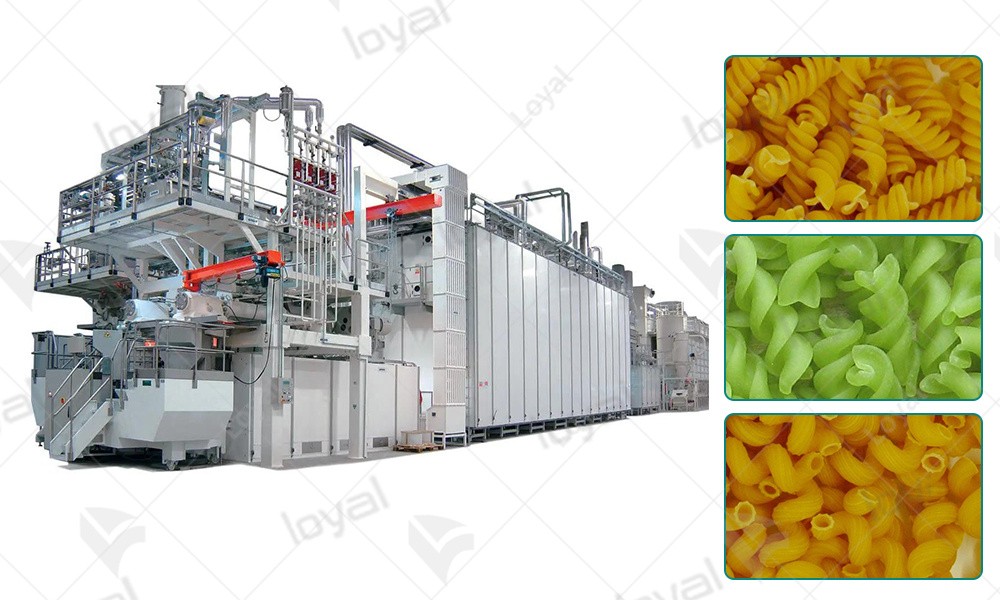
Drying Chambers: Multi-stage continuous drying rooms represent the second critical core of the production line. These systems reduce moisture content from approximately 30% at extrusion to below 12.5% for shelf stability—a process that must occur gradually to prevent cracking or "checking." Advanced lines divide drying into precise zones: pre-drying, main drying, and stabilization cooling, each with independent temperature, humidity, and airflow controls .
Shaping and Cutting Mechanisms: Interchangeable die sets allow producers to switch between tubular macaroni, spirals, shells, and countless other configurations. Bronze dies impart a rough surface texture that better holds sauce, while Teflon-coated alternatives offer easier cleaning and longer operational life .

Production Line Configurations
Manufacturers can choose from several line configurations based on their target products:
- Long-cut pasta lines for spaghetti, fettuccine, and linguine, featuring specialized cutting and drying systems that maintain product integrity
- Short-cut pasta lines for penne, fusilli, and farfalle, with advanced extrusion and shaping technologies
- Dedicated macaroni lines optimized for tubular shapes, ensuring uniform wall thickness and consistent hollow centers
Production capacities span a wide spectrum, from 100 kg/h entry-level systems suitable for artisanal producers to 2,000 kg/h industrial installations capable of supplying regional distribution networks .

Performance Specifications That Matter
When evaluating a macaroni production line, procurement teams must look beyond marketing claims and examine verifiable technical parameters that directly impact operational outcomes.
Extrusion Precision: The extruder's ability to maintain consistent pressure and temperature directly affects product uniformity. Look for systems with independent zone controls and real-time monitoring. Vacuum levels should reach at least -0.8 bar for optimal air removal, and screw designs must accommodate varying dough viscosities—particularly important for producers working with alternative flours .
Drying Accuracy: Multi-stage drying with independent zone control is non-negotiable for consistent quality. Temperature control should maintain ±1°C accuracy across all drying phases, while humidity management prevents case hardening—where the exterior dries too quickly, trapping moisture inside and leading to subsequent cracking . The best systems use predictive algorithms that adjust parameters based on ambient conditions and product characteristics.
Material Quality: All food-contact surfaces must be constructed from AISI 304 or 316 stainless steel to prevent contamination and ensure longevity. For extrusion dies, buyers face a choice between bronze (superior surface texture, faster wear) and stainless steel with Teflon coating (longer life, easier cleaning). Die hardness should exceed HRC 58 for acceptable wear resistance .
Energy Efficiency: With electricity costs representing a significant portion of operating expenses, motor efficiency ratings matter. Look for IE3-rated motors or better, and evaluate the line's specific energy consumption per kilogram of finished product. Advanced systems recover waste heat from cooling zones to pre-heat drying air, reducing overall energy demand by 15-25% .
Automation and Control Systems
The sophistication of a line's control architecture determines both product consistency and labor requirements. Modern systems feature:
- PLC-based controls with intuitive HMI interfaces supporting multiple languages
- Recipe management storing dozens of product parameters for instant changeover
- Real-time monitoring of critical variables with automatic adjustment capabilities
- Remote diagnostics enabling supplier support without on-site visits
For producers targeting specialty segments, verify that the control system can accommodate non-standard formulations. Gluten-free doughs, for instance, behave differently than wheat-based equivalents and may require modified extrusion parameters .
Industry Standards and Compliance
Reliable suppliers demonstrate commitment to quality through recognized certifications. At minimum, a macaroni production line should comply with:
ISO 9001: The baseline quality management standard, indicating documented processes and continuous improvement protocols. Verify current certification through third-party databases rather than accepting supplier-provided copies .
CE Marking: Mandatory for equipment operating in European markets, CE certification confirms compliance with EU safety, health, and environmental protection requirements. The certification should specifically reference the Machinery Directive 2006/42/EC .
Food-Grade Material Certifications: Documentation confirming that all product-contact surfaces meet relevant food safety standards, including FDA compliance for exports to North American markets .
In-Process Quality Control
Leading manufacturers implement rigorous quality control protocols throughout production:
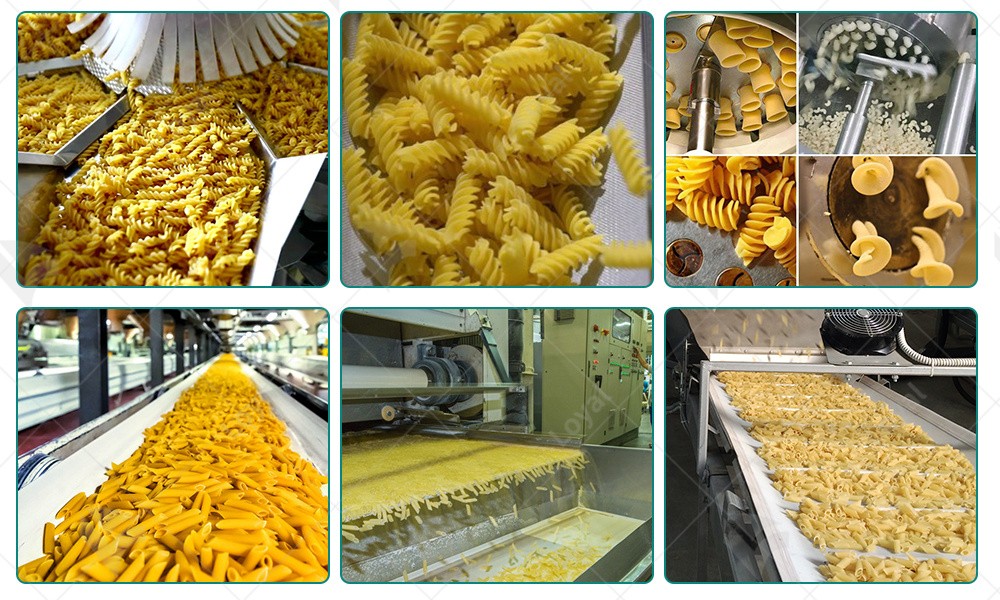
Extrusion Consistency Monitoring: Continuous measurement of die pressure, dough temperature, and extrusion rate with automatic adjustment loops. Vision systems increasingly inspect extruded shapes in real-time, flagging deviations before they become大批量 defects .
Moisture Control: Online moisture analyzers provide real-time feedback to drying controls, maintaining final product moisture within ±0.5% of target. This precision prevents both under-drying (microbiological risk) and over-drying (economic loss and quality degradation) .
Breakage Rate Monitoring: Automated systems track breakage rates post-drying, with modern lines achieving rates below 3% compared to 8-10% for conventional equipment . This improvement alone can justify equipment upgrades through reduced material waste.
Virtual Audits: When travel isn't feasible, request live video walkthroughs showing:
- Machining centers and welding stations
- Assembly areas with work-in-progress
- Testing bays with instrumentation
- Spare parts inventory
Supplier Capability Assessment
The most reliable suppliers demonstrate:
In-House Engineering: Companies maintaining dedicated R&D teams (typically 15-25 engineers) can address customization requests and troubleshoot issues without external dependencies. They should demonstrate expertise in both mechanical design and control system programming .
Manufacturing Infrastructure: Modern fabrication capabilities—CNC machining centers, laser cutting, robotic welding—indicate investment in precision. Suppliers with these assets typically deliver better fit and finish than those outsourcing critical components .

Conclusion
The macaroni production line of 2026 represents a remarkable convergence of traditional food processing wisdom and cutting-edge industrial technology. From vacuum extrusion that produces superior texture to AI-powered quality control that eliminates defects, today's equipment offers capabilities unimaginable just a generation ago. For producers willing to invest in systematic supplier evaluation and structured procurement processes, the rewards include not only operational efficiency but also the flexibility to respond to evolving consumer preferences—whether for ancient grain formulations, protein-enriched pastas, or sustainable packaging configurations.
As the industry continues its rapid evolution, one principle remains constant: the quality of the finished product begins with the quality of the production line. By applying the selection criteria, quality standards, and evaluation frameworks outlined in this guide, procurement teams can confidently navigate the complex landscape of equipment options and select partners positioned for long-term success.
Reference
The following are five authoritative foreign literature websites in the field of Industrial food machinery:
1. Food Engineering Magazine
Website: https://www.foodengineeringmag.com/
2.Food Processing Magazine
Website: https://www.foodprocessing.com/
3.Journal of Food Engineering
Website:https://www.journals.elsevier.com/journal-of-food-engineering
4. Food Manufacturing Magazine
Website:https://www.foodmanufacturing.com/
5. International Journal of Food Science & Technology
Website:https://onlinelibrary.wiley.com/